Office Worker Sends Pet Greeting Straight To Supervisor Inbox
February 24, 2026
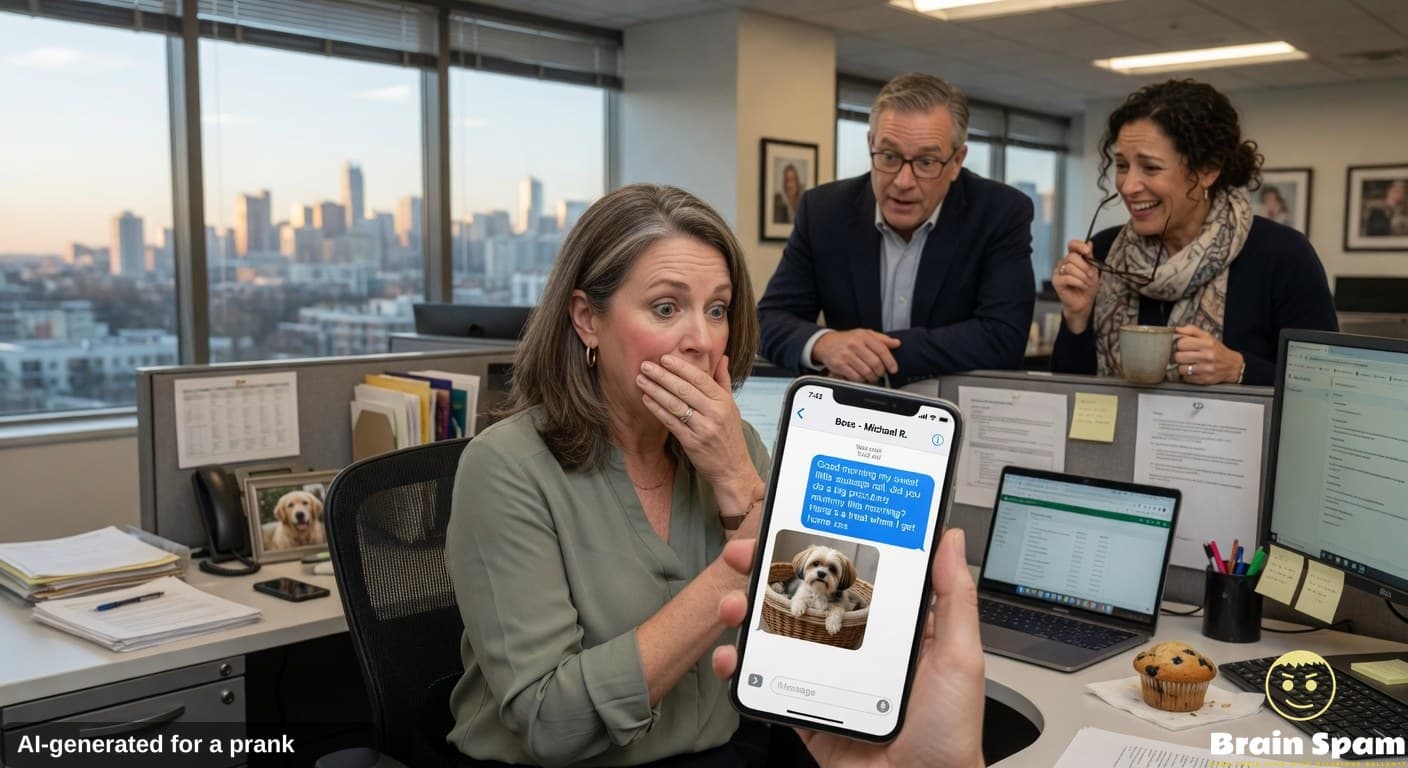
Lacey Brunt set out on the morning of February 24 2026 to fire off a polite good morning note to their boss but the text arrived carrying the full weight of language reserved for a favorite household companion. What began as a simple attempt at workplace courtesy quickly spiraled when the message opened with affectionate nicknames and questions about favorite toys that no supervisor would ever expect to receive during routine business hours. Colleagues later described the entire floor falling into an uneasy hush as the reply chain grew longer and more puzzled with each passing minute.
The Morning Mishap
Within minutes of the initial send the entire department found itself fielding calls from human resources representatives who wanted to confirm whether the communication represented a new company policy on pet themed motivation or merely an isolated slip of the thumb. Witnesses recalled watching Lacey Brunt stare at the phone screen in growing horror while nearby desks erupted into quiet speculation about what exactly the phrase good morning my favorite little biscuit consumer could possibly mean in a professional context. The situation only worsened when follow up attempts to clarify the error produced additional autocorrected lines that referenced belly rubs and scheduled walk times leaving the supervisor visibly unsettled during the first morning meeting.
Reactions poured in from every corner of the building as staff members tried to maintain normal operations while secretly wondering whether their own devices might betray similar private habits in the near future. One analyst spent the next hour rewriting an entire presentation to remove any mention of treats or toys fearing that even neutral language could be misinterpreted after the morning incident. By midday the break room conversations had shifted from standard coffee complaints to hushed debates about the safest way to address supervisors without accidentally invoking animal companionship phrases that might linger in email archives for years.
Lingering Confusion
By afternoon the building had adopted an unofficial protocol requiring all good morning texts to be composed on desktop computers rather than phones to avoid any further cross contamination between personal pet routines and professional correspondence. Security personnel began monitoring the lobby more closely than usual as if expecting additional messages about litter box habits to arrive from unknown sources. Lacey Brunt spent the remainder of the shift fielding concerned emails from distant coworkers who had heard only fragments of the story yet felt compelled to offer advice on resetting predictive text settings before the next workday began.
The Final Development
Late in the day an internal memo circulated suggesting that all employees review their contact lists to ensure supervisors and pets remained in clearly separate groups going forward. The atmosphere remained charged with the possibility that similar mix ups could occur at any moment prompting several staff members to disable autocorrect entirely on their devices. As the clock approached closing time the building settled into an odd calm broken only by the occasional nervous laugh whenever anyone reached for their phone to send an evening message home.
Related Searches
🎉Gotcha!
This satirical story was created by a BrainSpam user using the BrainSpam platform — a tool for generating fictional and humorous stories for entertainment.
Create your own at BrainSpam.com
Disclaimer: This article was created by a user of BrainSpam and is intended solely for satire, parody, and entertainment purposes.
BrainSpam is a platform that allows users to create fictional, humorous, or exaggerated stories about real or imaginary people and events.
The content above is not factual reporting and should not be interpreted as statements of fact. It reflects the creative expression of the individual user who created it, not the views of BrainSpam or its operators.
Real persons may be referenced as part of parody or commentary. Any resemblance to actual events or individuals is used in a satirical or fictional context.
BrainSpam does not verify or endorse user-generated content published on this platform.
More from TextingFails.com
Bizarre
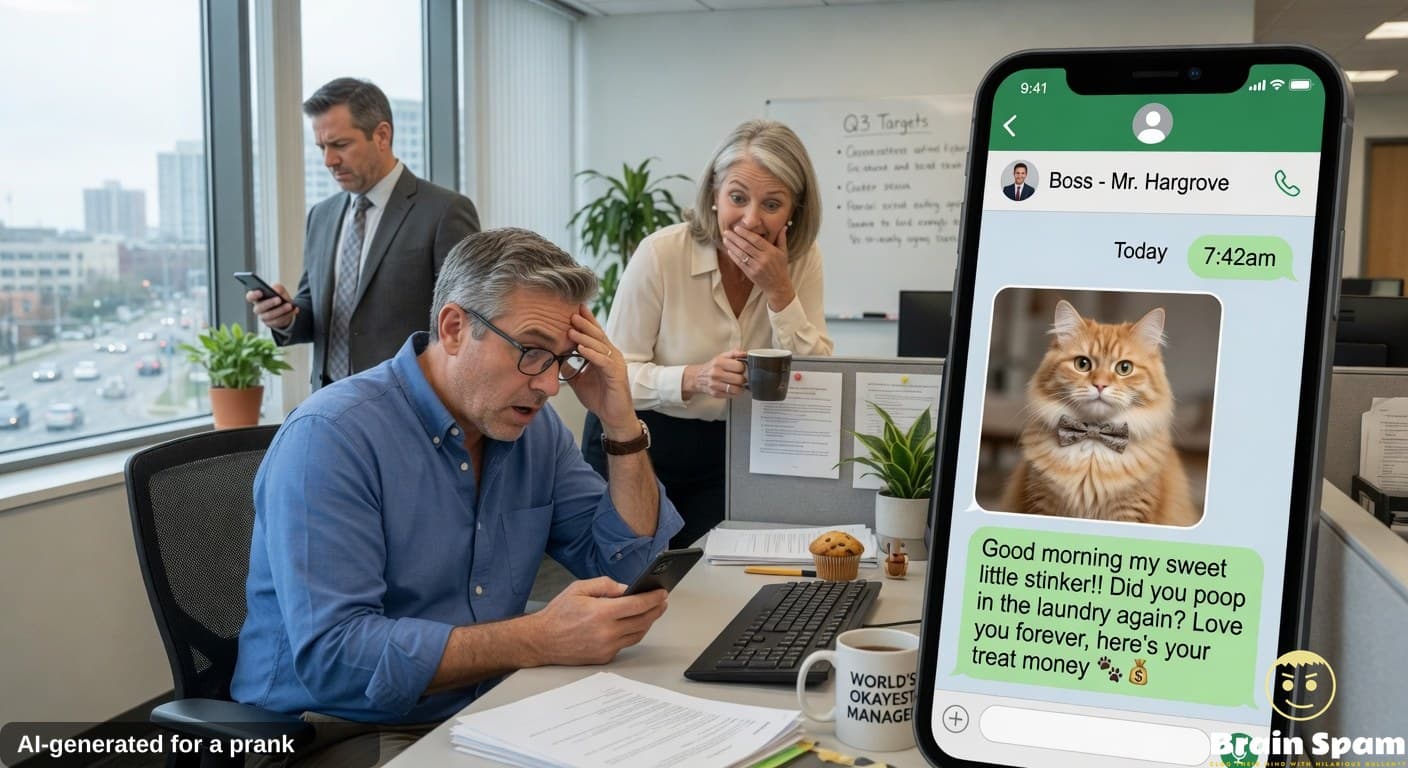
A Routine Morning Greeting Lands In The Wrong Inbox Once Again
Bizarre
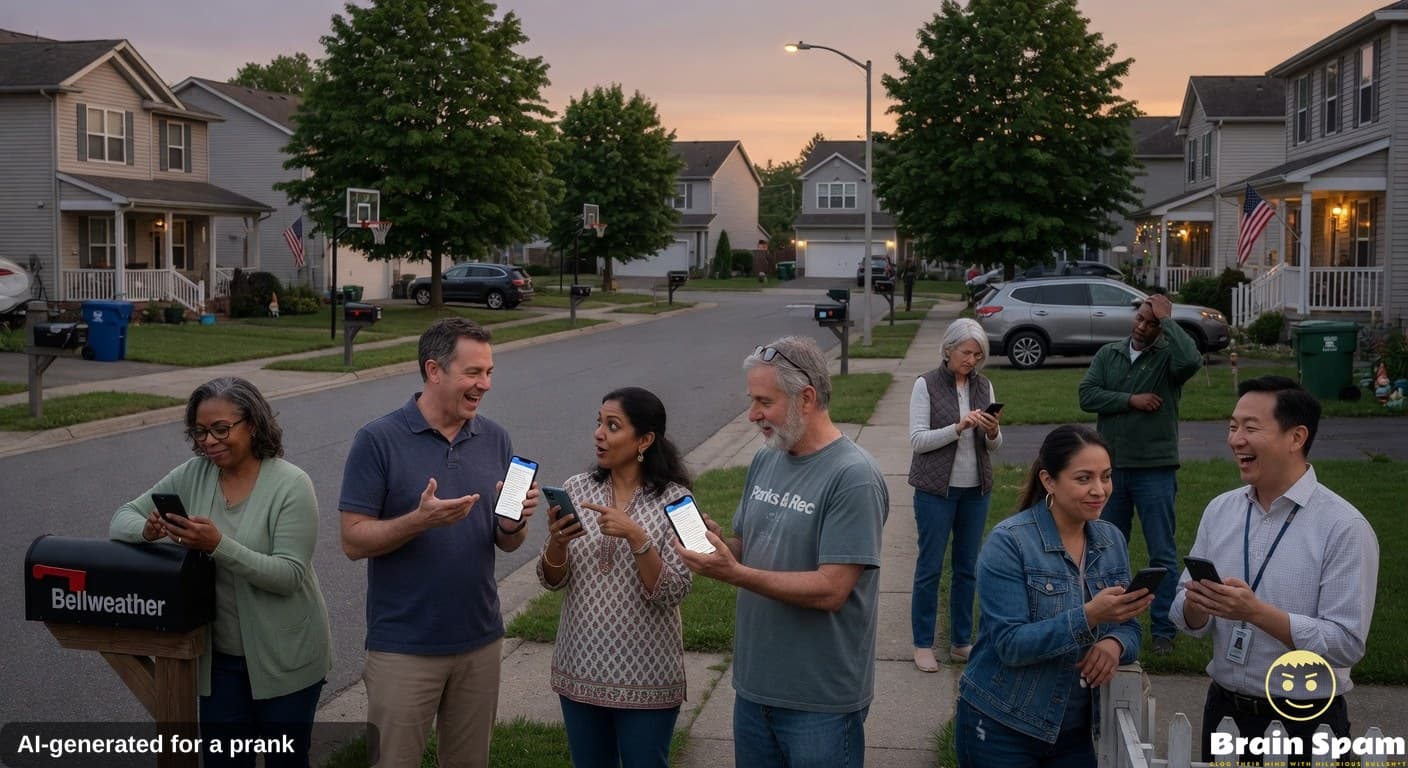
BREAKING: MARCUS BELLWEATHER SELF REMINDER TEXT IGNITES ENTIRE NEIGHBORHOOD THREAD IN SHOCKING MIXUP YOU WON'T BELIEVE
Unbelievable
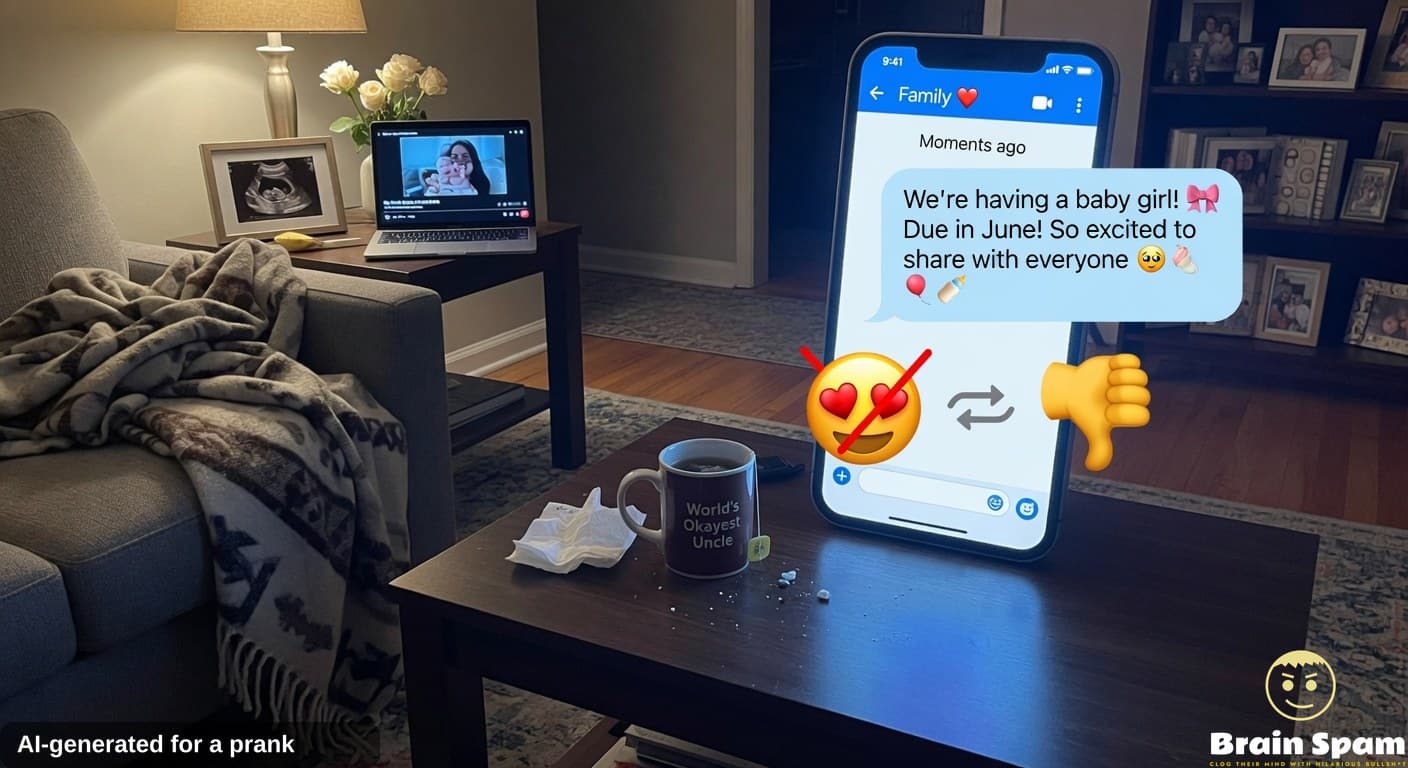
BREAKING: BARRY ONWUDIWE'S WRONG EMOJI REACTION TO FAMILY ANNOUNCEMENT SENDS SHOCKWAVES YOU WON'T BELIEVE THE CHAOS
Bizarre
The Polite Cancellation That Unleashed an Endless Chain of Replies
Unbelievable
BREAKING EXCLUSIVE: NADIA FORSYTHE'S WRONG EMOJI TO FAMILY ANNOUNCEMENT SENDS SHOCKWAVES ACROSS SCREENS
Bizarre